
In Other Worlds, Cut to the Cheese

Did the title of this blog make your forehead wrinkle in confusion? If it did, then you’re the victim of an egg corn. Actually, two egg corns. If the title were written correctly, it would say, “In Other Words, Cut to the Chase.” Which means, “By way of explanation, stop wasting time and tell me what’s most important.” But that wouldn’t be as fun, now would it?

If you’re wondering what the fluff? an egg corn is, I wondered the same thing a couple months ago. An egg corn is a word or phrase that someone substitutes for a common phrase they’ve misheard or misinterpreted, because to them, their phrase still makes sense. Sometimes the substitution can be somewhat logical. But often, it’s hilarious or absurd. The word “acorn” has been mistakenly spoken as “egg corn” by countless people since the 1800s. In 2003, Mark Liberman finally coined the phrase “egg corn” as an official linguistic term and made a blog post about it. And here we are today.

Editors will typically correct an egg corn that has been mistakenly substituted for a common phrase. Even before I was aware of the term, I corrected these types of phrasing errors. But I can think of a few situations when authors might intentionally include an egg corn or two in their writing:

  • in dialogue, when a character unknowingly speaks a phrase incorrectly
  • in dialogue, when a character is trying to be funny
  • in narrative, as an intentional play on words in relation to surrounding text
  • in narrative, as a method of humor

If you’re looking for a list of egg corns, there’s a link to one at the end of the post. Keep reading to solve a couple egg-corn quizzes that I created for your amusement.

In each pair of phrases below, one is the correct original form, and the other is an egg corn. For each of the ten pairs, guess which phrase is correct:

stand at attentionstand at a tension
[check answer]

Correct!

[check answer]

Nope.

old wise taleold wives’ tale
[check answer]

Nope.

[check answer]

Correct!

happy as a clownhappy as a clam
[check answer]

Nope.

[check answer]

Correct!

taken for grantedtaken for granite
[check answer]

Correct!

[check answer]

Nope.

run the gambitrun the gamut
[check answer]

Nope.

[check answer]

Correct!

tongue in cheektongue and cheek
[check answer]

Correct!

[check answer]

Nope.

takes two to tangotakes two to tangle
[check answer]

Correct!

[check answer]

Nope.

for all intensive purposesfor all intents and purposes
[check answer]

Nope.

[check answer]

Correct!

nip it in the budnip it in the butt
[check answer]

Correct!

[check answer]

Nope.

shutter to thinkshudder to think
[check answer]

Nope.

[check answer]

Correct!


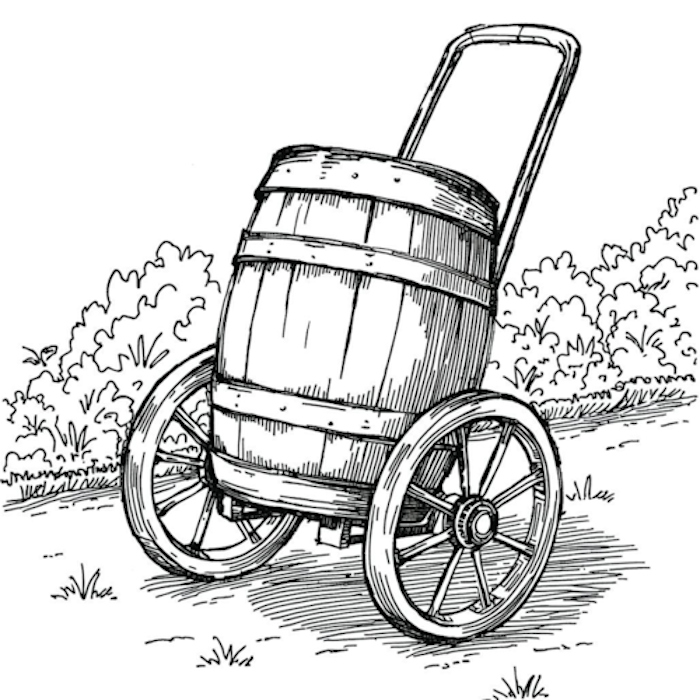
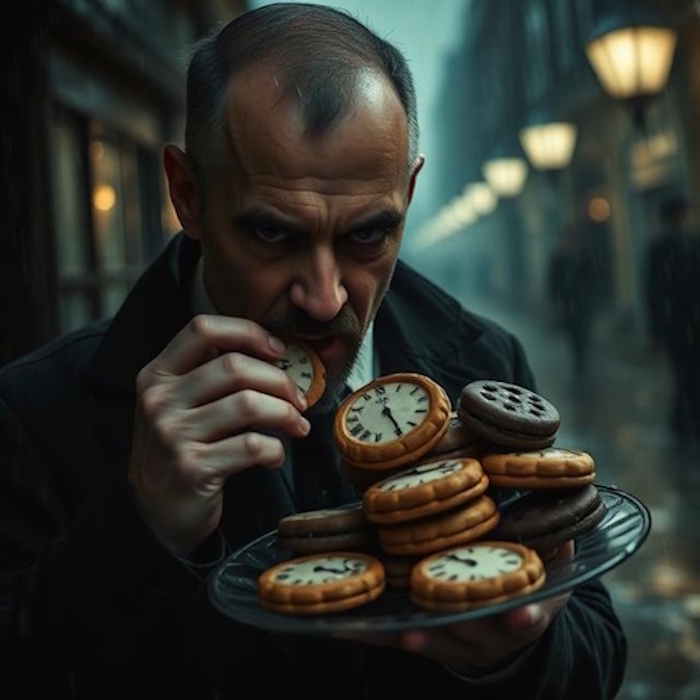
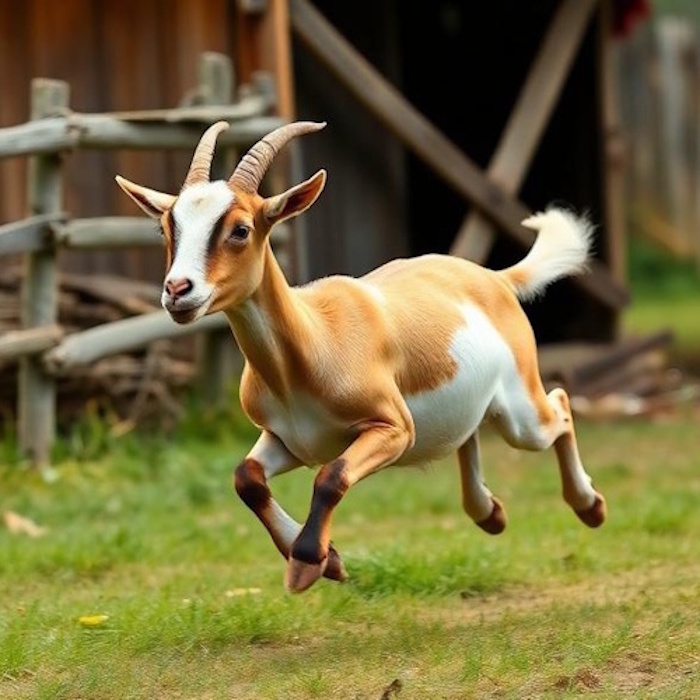
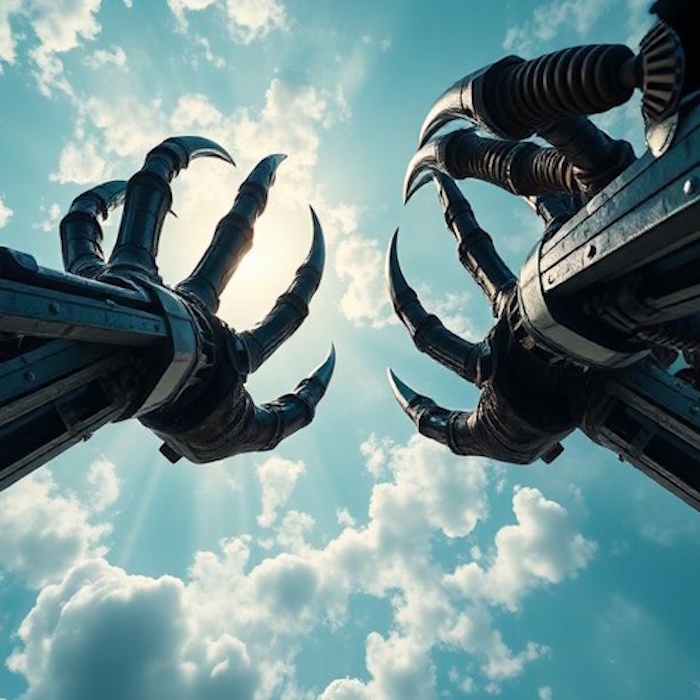
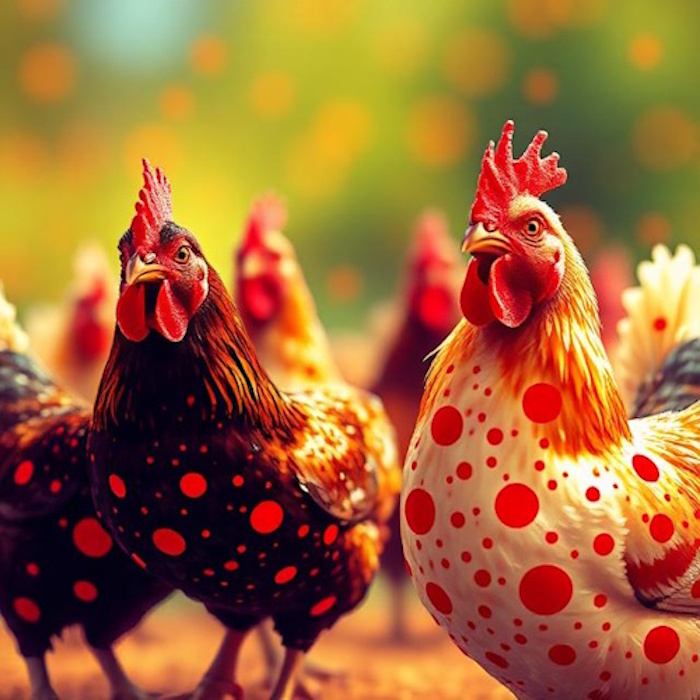
This one might be a little bit tougher. After experimenting with AI, I came up with these five images that represent some well-known egg corns. For each image, first try to guess the egg corn and then the original phrase that the egg corn comes from. Then reveal the answer on the right.


[reveal answer]

Egg corn: chicken spots
Original form: chicken pox
Usage: Sandra caught chicken pox from another kid in her class.
Meaning: Contagious viral illness, causing an itchy rash of red spots.


[reveal answer]

Egg corn: wheelbarrel
Original form: wheelbarrow
Usage: Joe pushed the wheelbarrow full of gravel to the driveway.
Meaning: A small cart with one wheel and two handles used for carrying loads.


[reveal answer]

Egg corn: biting my time
Original form: biding my time
Usage: I’m biding my time until I ask my boss for a raise.
Meaning: Waiting patiently for the right moment to act.


[reveal answer]

Egg corn: escape goat
Original form: scapegoat
Usage: The coach made the rookie the scapegoat for the team’s loss.
Meaning: A person or group unfairly blamed for others’ mistakes or problems.


[reveal answer]

Egg corn: skyscratcher
Original form: skyscraper
Usage: The skyscraper towers over the city skyline.
Meaning: A tall city building typically over 40 stories high.


And finally, I thought it would be fun to make up some new egg corns. For example, I made up an egg corn for “back to the drawing board.”

His first plan didn't work, so he went to smack two chalkboards and try something else. 😆

Here are 6 common American phrases. I’d love to hear how you think someone might accidentally (or purposefully) rephrase them. The more outrageous, the better. And bonus points if you use it in a sentence. Let me know in the comments!

  • put the cart before the horse
  • pull yourself up by your bootstraps
  • bark up the wrong tree
  • break a leg
  • quit cold turkey
  • swing for the fences

So how did you do on the quizzes?

List of 100 egg corns

Images created using DeepAI.

20 Types of Poetry

What makes a poem different from a story? A story is written in paragraphs, consisting of (mostly) full sentences and some dialogue. Poetry is written in a variety of styles.

Some styles use full sentences, but often poetry consists of sentence fragments and phrases that are grouped together in stanzas*. Poetry can be used to tell a story, or simply to describe a feeling. Sometimes poems are cryptic, requiring analyzation to determine their true meaning. Poetry can be humorous or intentionally somber. Rhyming patterns* vary and are not always consistent. Meter*, alliteration*, and repetition are frequently just as important as the rhyming pattern. Some poems are very short, only a few lines long. A few famous poems are long enough to fill a large, thick book. Occasionally, poets may play with formatting to display their work creatively on the page.

When I write poetry, I typically write free verse with occasional rhyming. A few of them are formatted on the page to match the theme of the poem just for fun. I love reading poems that tell a story in a unique way, as well as compelling free verse.

Can you match the twenty kinds of poetry listed below to their descriptions? I must admit that I was previously unfamiliar with a couple of them, such as the villanelle (…??). Click on the link at the end of the article to check your answers.

Do you know of any other type of poetry not mentioned here? Let me know in the comments and share which kind of poetry is your favorite to read and which is your favorite to write. Common poetry terms (noted with an *) are defined after the poem descriptions.

Types of poetry (in alphabetical order):

  • Acrostic
  • Ballad
  • Blackout poetry
  • Concrete poetry
  • Ekphrastic poetry
  • Elegy
  • Epic
  • Epigram
  • Epitaph
  • Free verse
  • Haiku
  • Limerick
  • List poetry
  • Lyric poetry
  • Narrative poetry
  • Ode
  • Palindrome* poetry
  • Pantoum
  • Sonnet
  • Villanelle

Descriptions (in random order):

  • Japanese poetry consisting of three lines; may or may not rhyme:
    • Line 1: five syllables
    • Line 2: seven syllables
    • Line 3: five syllables
  • Fourteen lines; typically about love, romance, or desire; rhyme schemes*:
    • ABBA ABBA CDE CDE or
    • ABAB CDCD EFEF GG
  • Nineteen lines; ABA ABA ABA ABA ABA ABAA rhyme scheme; certain lines are repeated:
    • Line 1
    • Line 2
    • Line 3
    • Line 4
    • Line 5
    • Line 6 – repeat line 1
    • Line 7
    • Line 8
    • Line 9 – repeat line 3
    • Line 10
    • Line 11
    • Line 12 – repeat line 1
    • Line 13
    • Line 14
    • Line 15 – repeat line 3
    • Line 16
    • Line 17
    • Line 18 – repeat line 1
    • Line 19 – repeat line 3
  • First letter of each line vertically spells out a name, word, or phrase
  • Poem with no rules
  • Usually short; written to praise a person, thing, or event; often ten lines
  • Funny or shocking; AABBA rhyme scheme; lines 3 and 4 are shorter than the other lines; the last line is the punchline.
  • Written in mourning after a death; often consisting of several two-line stanzas
  • Tells a dramatic or emotional story; ABAB or ABCB rhyme scheme
  • Vividly describes a painting, sculpture, drawing, or other form of visual art
  • Designed to take a particular shape or form on the page; spacing or layout is often manipulated to emphasize a theme or element in the text, or sometimes make the physical shape of the poem’s subject
  • Short, witty, and satirical
  • Short phrase written in memory of a person whose died, often inscribed on a tombstone or grave marker.
  • Expressive, songlike poem that is centered on emotions and focused on the poet’s state of mind and personal themes rather than narrative arcn emotions
  • Large portions of an existing text are blacked out to reveal the remaining visible words that form the new poem
  • Very long poem which tells a story about a character’s adventures, accomplishments, and daring feats.
  • Shorter yet fully developed story that focuses more on plot instead of emotion or adventure, often with a specific rhyming scheme.
  • Poem that consists of four-line stanzas* that repeat in a pattern; no set length; changes in punctuation, verb tense, pronouns, word order, homonyms, and plurality are allowed when repeating lines.
    • Line 1
    • Line 2
    • Line 3
    • Line 4
    • Line 5 – repeat line 2
    • Line 6
    • Line 7 – repeat line 4
    • Line 8
    • Line 9 – repeat line 6
    • Line 10
    • Line 11 – repeat line 8
    • Line 12
    • Line 13 – repeat line 10
    • Line 14
    • Line 15 – repeat line 12
    • Line 16

      Final stanza continues same pattern but ends with a repeat of line 1 as the final line in the poem.
  • Poem that reads the same forward or backward with a word in the center as the reversal point
  • List of things; funny or moving last line

Visit https://karolyneditsbooks.com/poetry_types.html to check your answers.
[I will add any new poetry types at the link above, but you won’t find them in this blog post because I want to keep the post title and poetry exercise intact.]


Alliteration – Repetition of the same sound at the beginning of a series of words in succession

Meter – Pattern of stressed syllables (long-sounding) and unstressed syllables (short-sounding) in poetry

Palindrome – Word, phrase, verse, sentence, or poem that reads the same forward or backward

Rhyme scheme/pattern – Lines that end with rhyming words are identified by the same letter. Examples of rhyme schemes:

  • AA BB CC
    • three stanzas
    • last words of lines 1 and 2 rhyme
    • last words of lines 3 and 4 rhyme
    • last words of lines 5 and 6 rhyme
  • AABBA
    • in each stanza, last words of lines 1, 2, and 5 rhyme
    • in each stanza, last words of lines 3 and 4 rhyme

Stanza – Set amount of lines grouped together in poetry by their length, meter, or rhyme scheme