Did the title of this blog make your forehead wrinkle in confusion? If it did, then you’re the victim of an egg corn. Actually, two egg corns. If the title were written correctly, it would say, “In Other Words, Cut to the Chase.” Which means, “By way of explanation, stop wasting time and tell me what’s most important.” But that wouldn’t be as fun, now would it?
If you’re wondering what the fluff? an egg corn is, I wondered the same thing a couple months ago. An egg corn is a word or phrase that someone substitutes for a common phrase they’ve misheard or misinterpreted, because to them, their phrase still makes sense. Sometimes the substitution can be somewhat logical. But often, it’s hilarious or absurd. The word “acorn” has been mistakenly spoken as “egg corn” by countless people since the 1800s. In 2003, Mark Liberman finally coined the phrase “egg corn” as an official linguistic term and made a blog post about it. And here we are today.
Editors will typically correct an egg corn that has been mistakenly substituted for a common phrase. Even before I was aware of the term, I corrected these types of phrasing errors. But I can think of a few situations when authors might intentionally include an egg corn or two in their writing:
in dialogue, when a character unknowingly speaks a phrase incorrectly
in dialogue, when a character is trying to be funny
in narrative, as an intentional play on words in relation to surrounding text
in narrative, as a method of humor
If you’re looking for a list of egg corns, there’s a link to one at the end of the post. Keep reading to solve a couple egg-corn quizzes that I created for your amusement.
In each pair of phrases below, one is the correct original form, and the other is an egg corn. For each of the ten pairs, guess which phrase is correct:
stand at attention
stand at a tension
[check answer]
Correct!
[check answer]
Nope.
old wise tale
old wives’ tale
[check answer]
Nope.
[check answer]
Correct!
happy as a clown
happy as a clam
[check answer]
Nope.
[check answer]
Correct!
taken for granted
taken for granite
[check answer]
Correct!
[check answer]
Nope.
run the gambit
run the gamut
[check answer]
Nope.
[check answer]
Correct!
tongue in cheek
tongue and cheek
[check answer]
Correct!
[check answer]
Nope.
takes two to tango
takes two to tangle
[check answer]
Correct!
[check answer]
Nope.
for all intensive purposes
for all intents and purposes
[check answer]
Nope.
[check answer]
Correct!
nip it in the bud
nip it in the butt
[check answer]
Correct!
[check answer]
Nope.
shutter to think
shudder to think
[check answer]
Nope.
[check answer]
Correct!
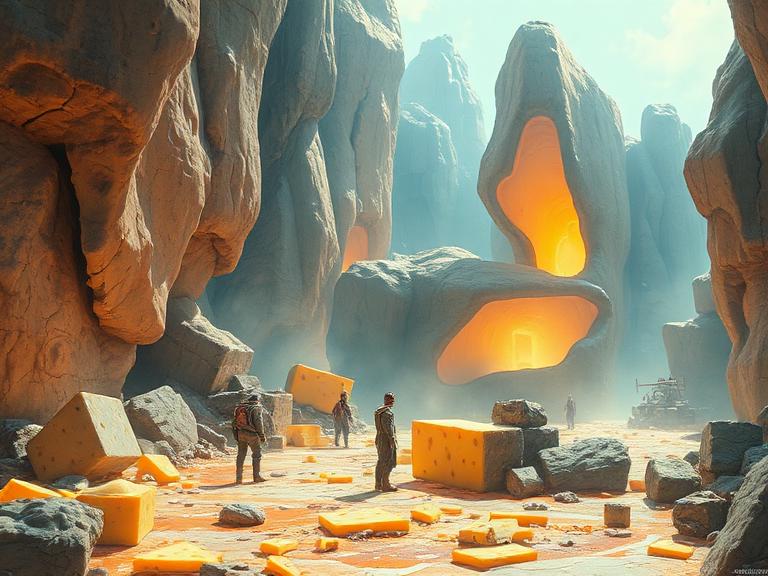
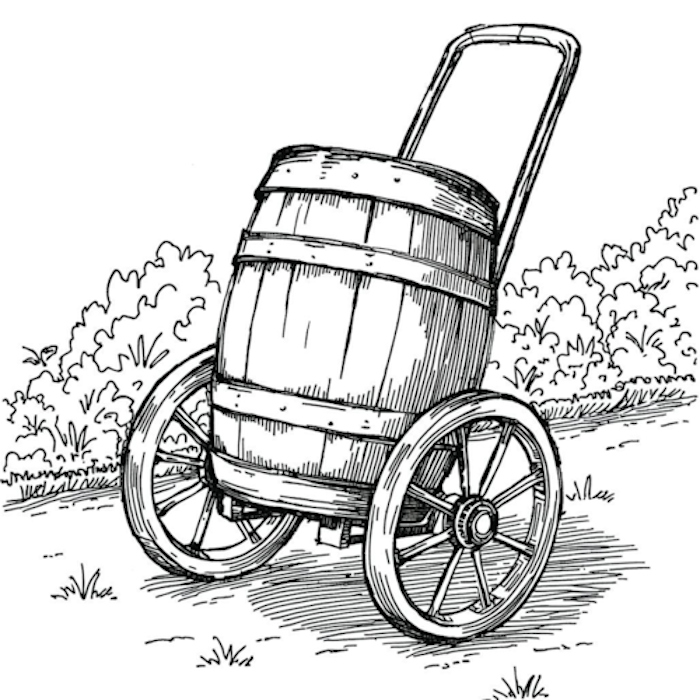
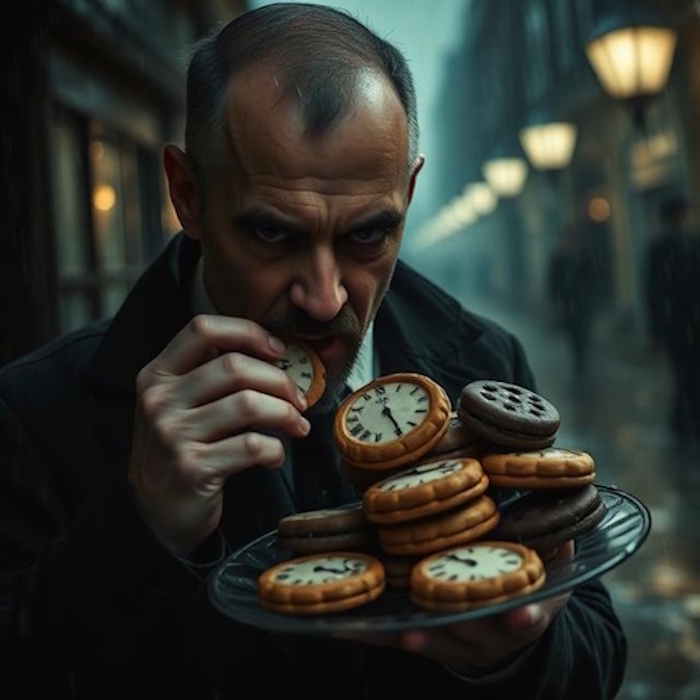
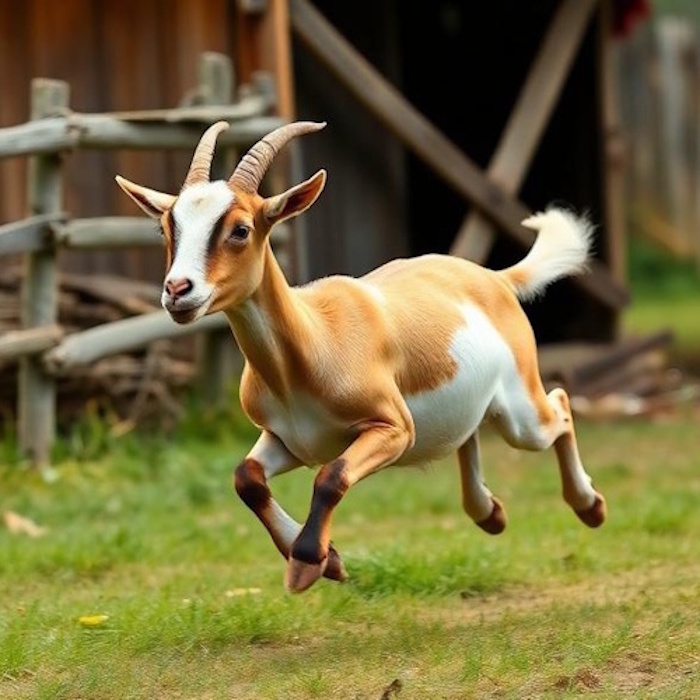
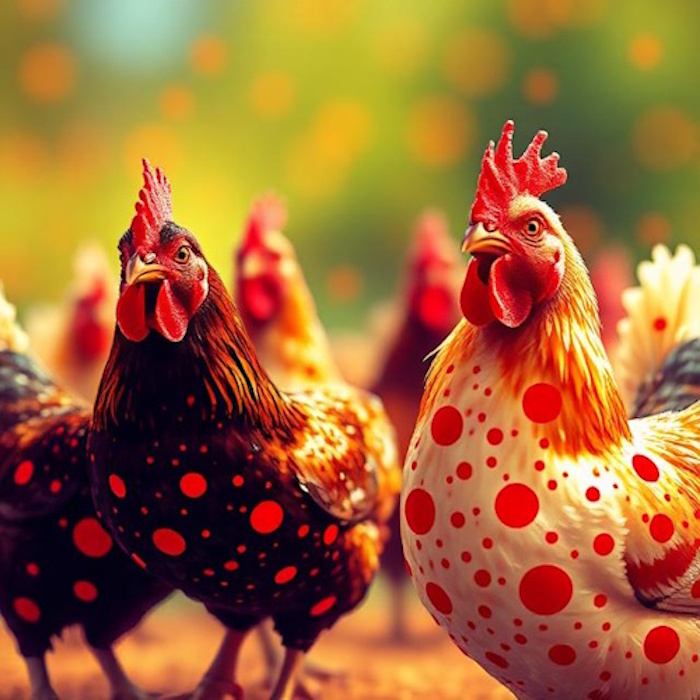
This one might be a little bit tougher. After experimenting with AI, I came up with these five images that represent some well-known egg corns. For each image, first try to guess the egg corn and then the original phrase that the egg corn comes from. Then reveal the answer on the right.
[reveal answer]
Egg corn: chicken spots
Original form: chicken pox
Usage: Sandra caught chicken pox from another kid in her class. Meaning: Contagious viral illness, causing an itchy rash of red spots.
[reveal answer]
Egg corn: wheelbarrel
Original form: wheelbarrow
Usage: Joe pushed the wheelbarrow full of gravel to the driveway. Meaning: A small cart with one wheel and two handles used for carrying loads.
[reveal answer]
Egg corn: biting my time
Original form: biding my time
Usage: I’m biding my time until I ask my boss for a raise. Meaning: Waiting patiently for the right moment to act.
[reveal answer]
Egg corn: escape goat
Original form: scapegoat
Usage: The coach made the rookie the scapegoat for the team’s loss. Meaning: A person or group unfairly blamed for others’ mistakes or problems.
[reveal answer]
Egg corn: skyscratcher
Original form: skyscraper
Usage: The skyscraper towers over the city skyline. Meaning: A tall city building typically over 40 stories high.
And finally, I thought it would be fun to make up some new egg corns. For example, I made up an egg corn for “back to the drawing board.”
His first plan didn't work, so he went to smack two chalkboards and try something else. 😆
Here are 6 common American phrases. I’d love to hear how you think someone might accidentally (or purposefully) rephrase them. The more outrageous, the better. And bonus points if you use it in a sentence. Let me know in the comments!
Maintaining consistent and appropriate verb tenses in a book prevents confusion related to past, present, and future events. A book’s main narrative verb sense stays the same throughout. However, verb tenses vary in spoken dialogue, inner dialogue, memories, and flashbacks. Verb forms are also based on whether the person/thing performing the action (subject) is singular or plural, but for this article, I won’t be addressing that aspect.
English nonfiction books tend to be written in present tense, but not all. Nonfiction books focused on historical events—for example, memoirs and biographies—are written in past tense. Poetry can be written in any verb tense, based on the perspective of the poet.
English fiction novels are typically written in past tense, but not always. For example, young adult fiction books are sometimes written in present tense because it’s more engaging and creates an increased sense of involvement.
Did you know that English has twelve main verb tenses? Along with basic past, present, and future tenses, we all use variations of the basics on a daily basis, despite most of us not being able to name them. If you’ve ever studied a foreign language, then you know that mastering any language involves learning the proper verb forms.
Following is a list of the twelve verb tenses, along with two short examples for each. The relevant verbs are in bold print.
present simple
I want to go home.
She wants to go home.
present continuous
I am helping my friend.
They are helping each other.
present perfect
I have tried Japanese food.
He has never tried sushi before.
present perfect continuous
I have been waiting forever.
She has not been waiting long.
past simple
I started the car.
You started the meeting.
past continuous
I was looking away when he walked by.
We were looking at the screen when it turned off.
past perfect
I had finished my meal when she called.
They had finished the job by the time the owner arrived.
past perfect continuous
I had been wondering where you were when you texted.
He had been wondering what to do when you left.
future simple
I will walk to work today.
She will walk to the store later.
future continuous
I will be visiting a friend next week.
He will be visiting his parents on Thanksgiving.
future perfect
By Friday, I will have used all of my crafting paint.
They will have used most of their mobile date before the end of the month.
future perfect continuous
I will have been driving for hours by the time I reach the hotel.
She will have been driving the new truck by then.
Other verb forms often considered separate tenses:
future in the past
I thought I would finish the project by Saturday.
conditional
He could sing if he wanted to.
imperative
“Stop the bus!”
subjunctive
She insisted that he leave.
Below is an excerpt from the story “The Adventure of the Speckled Band,” published in Adventures of Sherlock Holmes by Sir Arthur Conan Doyle (1892). Tenses for six highlighted verbs have been changed to demonstrate how using the wrong verb tense alters the meaning of a passage and can confuse the reader. See if you can determine what the appropriate verb tense should be in each case. Then keep reading to see the original text with the correct verb tenses reinserted.
(incorrect verbs highlighted)
Sherlock Holmes ran her over with one of his quick, all-comprehensive glances. “You must not fear,” said he, soothingly, bending forward and patted her forearm. “We are setting matters right, I have no doubt. You have come in by train this morning, I see.”
“You know me, then?”
“No, but I observe the second half of a return ticket in the palm of your left glove. You must have started early, and yet you will have had a good drive in a dog-cart, along heavy roads, before you reached the station.”
The lady gave a violent start, and stared in bewilderment at my companion.
“There is no mystery, my dear madam,” said he, smiling. “The left arm of your jacket was spattered with mud in no less than seven places. The marks are perfectly fresh. There is no vehicle save a dog-cart which throws up mud in that way, and then only when you sit on the left-hand side of the driver.”
“Whatever your reasons may be, you would be perfectly correct,” said she. “I started from home before six, reached Leatherhead at twenty past, and came in by the first train to Waterloo. Sir, I could stand this strain no longer; I shall go mad if it continues. I have no one to turn to—none, save only one, who cares for me, and he, poor fellow, can be of little aid. I have heard of you, Mr. Holmes; I have heard of you from Mrs. Farintosh, whom you had been helping in the hour of her sore need. It was from her that I had your address. Oh, sir, do you not think that you could help me, too, and at least throw a little light through the dense darkness which surrounds me? At present it is out of my power to reward you for your services, but in a month or six weeks I shall be married, with the control of my own income, and then at least you shall not find me ungrateful.”
Holmes turned to his desk, and unlocking it, draws out a small case-book, which he consulted.
Here is the original text with the correct verbs. Explanatory notes are included below each affected paragraph.
Sherlock Holmes ran her over with one of his quick, all-comprehensive glances. “You must not fear,” said he, soothingly, bending forward and patting her forearm. “We shall soon set matters right, I have no doubt. You have come in by train this morning, I see.”
Incorrect: are setting – present continuous
Correct: shall set – future simple
“Are setting” infers that the action had already begun.
“Shall set” correctly indicates that their action will happen in the future.
“You know me, then?”
“No, but I observe the second half of a return ticket in the palm of your left glove. You must have started early, and yet you had a good drive in a dog-cart, along heavy roads, before you reached the station.”
Incorrect: will have had - future perfect
Correct: had - past simple
“Will have had” infers that her drive will be completed by a certain time in the future.
“Had” correctly indicates that her drive happened in the past.
The lady gave a violent start, and stared in bewilderment at my companion.
“There is no mystery, my dear madam,” said he, smiling. “The left arm of your jacket is spattered with mud in no less than seven places. The marks are perfectly fresh. There is no vehicle save a dog-cart which throws up mud in that way, and then only when you sit on the left-hand side of the driver.”
Incorrect: was – past simple
Correct: is – present simple
Using “was” here refers to the action of spattering mud, which he did not witness.
Using “is” here correctly indicates that he currently sees spattered mud on her jacket.
“Whatever your reasons may be, you are perfectly correct,” said she. “I started from home before six, reached Leatherhead at twenty past, and came in by the first train to Waterloo. Sir, I can stand this strain no longer; I shall go mad if it continues. I have no one to turn to—none, save only one, who cares for me, and he, poor fellow, can be of little aid. I have heard of you, Mr. Holmes; I have heard of you from Mrs. Farintosh, whom you helped in the hour of her sore need. It was from her that I had your address. Oh, sir, do you not think that you could help me, too, and at least throw a little light through the dense darkness which surrounds me? At present it is out of my power to reward you for your services, but in a month or six weeks I shall be married, with the control of my own income, and then at least you shall not find me ungrateful.”
Incorrect: would be – conditional
Correct: are – present simple
“Would be” infers that the accuracy of his conclusion is conditional based on something else. Yet, she does not specify a condition.
“Are” correctly indicates that his conclusion is currently definitely correct, regardless of which reason he associated with his conclusion.

Incorrect: had been helping – past perfect continuous
Correct: helped – past simple
“Had been helping” infers that he helped Mrs. Farintosh in the past and continued to over a period of time.
“Helped” correctly indicates that he helped the woman in the past at a specific time.
Holmes turned to his desk, and unlocking it, drew out a small case-book, which he consulted.
Incorrect: draws – present simple
Correct: drew – past simple
If the narrative tense throughout the book were present tense, then “draws” would be fine. But the narrative tense throughout the book is past tense, so “drew” is correct, and indicates that he performed the action in the immediate past.
When editing, if I ever really get stuck on a verb that is clearly wrong that I’m not sure about, first I ask the client what their intentional meaning is, then I consult Perplexity AI to confirm the correct tense/form. It’s very helpful with solving complicated grammar issues.
Would you feel comfortable submitting your manuscript today?
Is your book ready for self-publishing and how do you know?
If you’ve finished or almost finished writing your rough draft and are excited to self-publish it, your answers to these questions are crucial. Many publishing guides discuss numerous steps in the process of achieving successful and lucrative publication, such as building a fanbase, creating a website, marketing and promotion, publishing platforms, finding a literary agent, etc.
My expertise solely focuses on how to prepare the actual manuscript for self-publication.
Below is a checklist for eight key elements of a publication-ready book. Sometime soon, I’ll be publishing my newest book, which will explore each element one at a time and also identify characteristics of manuscripts that are not ready to publish yet. Once it’s available, I’ll add the link here and on my website.
My goal as an editor is to help you create and publish the best version of your book possible!
Key elements of a publication-ready book
Well-developed characters and plot (fiction)
Clear and consistent ideas (nonfiction)
Descriptive and engaging writing
Relevant front and back matter
Thoroughly edited content
Accurately cited content and original material
Proper formatting for eBook and paperback publication
What makes one novel or book series your favorite? What makes a story memorable? What keeps you reading and unable to put the book down, even when you’re tired or have other more important things to do?
The answers could involve many aspects, but I feel that overall, how well the content draws you in and causes you to imagine yourself in the story, picturing and experiencing what the characters see and feel is what sets a fantastic book apart.
For some writers, a common method is to write an abbreviated story at first, simply telling what happens without any imagery or details. Then they go back through it again to add the details and imagery that will turn their story into a page-turner. When I’ve written short stories, I’ve generally done this as well, with a few exceptions. If I can picture the scene or events vividly in my mind, then I try to get the language right first, so I don’t forget.
Whether you’re rewriting a scene or writing it for the first time, put yourself in the shoes of the immediate character and imagine what they are thinking and sensing. Are they impatient? Are they cold? Does their elbow hurt because they recently bumped it against the table? Can they smell the grass that was just cut? Can they hear a dog barking in the distance? Can they still taste the coffee they finished half an hour ago? ☕ Who or what do they see around them?
If the scene takes place outside, or in a large indoor space, you can also imagine viewing events from above or from a distance. What would onlookers see? What physical details about the environment, scenery, and surroundings can you include to paint a clear picture for the reader? 🚂
Compare the next paragraph to the excerpt that follows it, taken from the western novel Shane by Jack Schaefer. Which version do you prefer? Which piece draws you into the story and makes you want to know more and keep reading? I rewrote the excerpt with less details to show how important the imagery and language in the actual book are to portray the story in an entertaining and evocative way.
Rewrite:
Shane accepted the bottle from Will and turned around to face Chris after he’d mocked him. Everyone in the room grew quiet as Chris stepped back a couple paces.
Original

Shane was just taking hold of the bottle Will had fetched him. His hand closed on it and the knuckles showed white. He moved slowly, almost unwillingly, to face Chris. Every line of his body was as taut as stretched whipcord, was alive and somehow rich with an immense eagerness. There was that fierce concentration in him, filling him, blazing in his eyes. In that moment there was nothing in the room for him but that mocking man only a few feet away.

The big room was so quiet the stillness fairly hurt. Chris stepped back involuntarily, one pace, two, then pulled up erect. And still nothing happened. The lean muscles along the sides of Shane's jaw were ridged like rock.
Another vital aspect of illustrative writing is well-placed dialogue. One of the best ways to draw readers into the narrative is to include realistic dialogue at the right time. So much more can be expressed about the characters’ emotions, motivations, and personality through dialogue than by simply writing about a conversation or past events.
Compare the two versions below. The excerpt I rewrote this time (without dialogue) is from historical fiction novel Savannah by Eugenie Price. Which version draws you into the room, and puts you there at the table, wanting to know more about Mark’s background and future plans?
Rewrite:
Mark then asked Robert if his father had mentioned him the night Robert had dined with him in Liverpool. Robert decided to be honest and tell him that his father hadn’t brought up his name at all. Mark expressed his gratefulness for Robert’s candor and for having had the chance to visit his father thirteen times. Robert was surprised at his reaction and response. Mark lamented his father’s abiding grief over losing his mother.
Original

"Could I ask one more question?"

"What is it?"

"My father didn't mention me the night you dined with him in Liverpool, did he?"

Robert Mackay's warm, brown eyes clouded. He got slowly to his feet and stood looking down at Mark. "If we're to be friends, as I hope and pray, there must always be some honesty between us, do you agree?"

"Oh, yes, sir." A half smile turned up one side of Mark's mouth. "My father didn't mention me, I'm sure. And you're not going to believe that it's all right that he didn't."

"My first thought was to lie to you, to say he had boasted of his fine son back in Philadelphia."

"If you'd said that, I might not feel as secure with you as I'm beginning to feel, sir. You see, that wouldn't have sounded a bit like Papa."

Mackay frowned, studying the young, expressive face. "You're really not hurt that he didn't bring up your name, are you? You're really quite calm and collected about the whole thing. Am I too forward to ask—how that can be?"

"No, sir. Not at all. You see, I'm accustomed to being misunderstood where my father is concerned." He sighed, waited a moment. When he spoke again, his voice had a quiet certainty. "But as I told my father the last time we were together, I'd rather have had him for thirteen glorious visits than to have had any other father on earth—every day."

Mackay shook his head. "How could the man have appeared to be so lost—when he had a son like you waiting for him?"

"Because he was lost, I think. Lost in grief, over the death of my mother. He didn't find himself in all those years."
Let me know in the comments about one of your favorite books—past or present—that includes strong imagery and dialogue!


 Write to Reason