
Noble Pursuits

pursuits

Project quote

“The goal of education is not to produce secondary school students who can only obtain high scores, but to train them to pursue their own knowledge independently.” (Feng Teng, M., 2017; Predictive effects of writing strategies…EFL writing proficiency.)

My thoughts

Oh, what a noble goal. Oh, if only that were really true of the current educational system in the US. Maybe it was in the past. Maybe it still is in random towns and other countries. But today’s system appears to be focused predominantly on test scores and political correctness. I remember when it was more important for teachers to focus on teaching students how to learn, and how to think, not WHAT to think. Or maybe I only wish I remember that time; hard to say. Luckily, parents can still play a part in raising their children with a curiosity and quest for knowledge, and teach them how to question and reason and not simply learn to recite facts and numbers and call it a day.


Editing projects for weeks ending December 10, 2017
Recommendation letters, Academic Research Articles, Website content
Client countries: China, US


Assumptions

assumptions

Project quote

“In the 1960s, Soviet astronomer, Nikolai Kardashev, devised a scale to rate the kind of theoretical civilization that we might develop into and the kind of alien civilizations that the SKA might reveal to exist elsewhere in the universe. In broad terms, according to Kardashev, out there in the cosmos, there may be intelligent life capable of making contact with us and it will be at one or another level of development. He classified these civilizations as Type One, Type Two or Type Three civilizations. For a benchmark, humans at this moment are—yep, Type Zero point five; we don’t rate, we’re barely on the scale. This comes as a real blow to our collective ego, especially if we think the whole universe was made only for us.” (Michael Smorenburg, 2014; A Trojan Affair)

My thoughts

For the record, one of my favorite authors to edit for. Unique writing talent, in my opinion.

I love reading science fiction, especially space related and military fiction titles. It’s fun to contemplate what non-human beings would look like and act like and how we would interact with them. It’s also an interesting intellectual exercise to theorize how their civilizations would compare to our own. But I feel it is unscientific and ridiculous to approve funding for programs costing millions or billions of dollars based on something that has not been proven to exist to any extent whatsoever. How can we possibly rate humans on this Kardashev scale in the real world, when it’s based on unproven guesses? On wishes and dreams?

Logic, or deductive reasoning, is defined as the following process:

“Deductive reasoning goes in the same direction as that of the conditionals, and links premises with conclusions. If all premises are true, the terms are clear, and the rules of deductive logic are followed, then the conclusion reached is necessarily true.” (Wikipedia contributors. “Deductive Reasoning.” Wikipedia, The Free Encyclopedia. 1 Dec. 2017. Web.)

If one of the premises of the argument for placing humans at Type 0.5 on this scale and justifying building this huge development and disrupting people’s lives irreversibly is that “Alien civilizations exist”, the conclusion is NOT “necessarily true” and is NOT logical because that premise has not been proven true. The problem I have with many accepted views in the ‘respected scientific community’ is that they are very often based on at least one false assumption, if not multiple.

Thoughts?


Editing projects for weeks ending November 26, 2017
Academic Research Articles, Fiction book
Client countries: China, South Africa


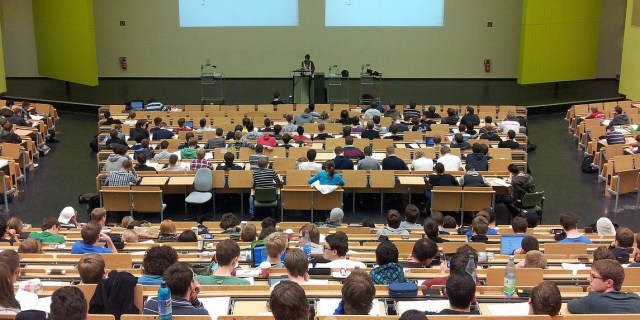


Elevated expectations

lecture

Project quote

“Characteristics of lecturers include enthusiasm, interaction, research experience, clarity, inspiration, and credibility.” (Feng Teng, M., 2017; Identity development of university English “old lecturers” in mainland China.)

My thoughts

When I hear the term ‘lecturer’, I picture a university lecture hall, with rows of seats wrapping around in a half-circle, rising from ground level up to the top tier, amphitheater style, and the lecturer’s podium below in the center. The lecturer paces back and forth across his or her space, occasionally writing on a whiteboard at the front, or randomly choosing a victim in the student audience to answer a question. I’ve only physically been in one of these types of rooms once, at a local university, where I met with a few members of a political interest group for a video presentation. But this is the image I hold in my head, probably acquired from various movies and television.

None of the classes at the college I attended were held in this type of a room. But the one lecturer who stands out in my mind as portraying all of the characteristics listed above was my Philosophy instructor. I enrolled in four of his courses and loved them all, most especially Intro to Logic. All of the philosophy courses were enjoyable and thought provoking. But Intro to Logic combined philosophy and math and gave me a headache after each class. That’s how I knew I was actually learning something and forcing my mind to think critically. He had elevated expectations for our essays and asked challenging questions in class. He encouraged voicing unpopular opinions and interpretations which led to very engaging class discussions.

Please share below about any lectures or courses that you’ve attended that stood out as particulary memorable.


Editing projects for week ending October 29, 2017
Excel spreadsheet, Cover letter, Academic Research Article, College application statement
Client countries: US, China


Companions

companion

Project quote

“With that warm body to his chest, Chikunda’s laughter turned to tears and then to sobs once more. Sobs at having something living that cared about him, something that, through its desperate whimpers and excited relief evidently needed care.” (Michael Smorenburg, 2017; The Reckoning)

My thoughts

This paragraph is about a dog, Jack, one of the secondary characters in the story. I love stories that incorporate a pet or animal companion as a substantial character. Books written directly from an animal’s perspective are few in number and are always enjoyable to read, as well. However, animals as main or secondary characters are especially appreciated by me, personally. They highlight how much color pets and other animals add to our lives and how each has their own distinct personality and worth.


Editing projects for weeks ending October 22, 2017
Fiction Book Critique, Academic Research Article, College Application Personal Statement, Fiction book
Client countries: US, China, South Africa